The short version
- Multi-band uses more than one satellite frequency to reduce some reflected-signal errors.
- It is most useful around tall buildings, cliffs, forests and other obstructed routes.
- It does not guarantee perfect pace, distance or tracks.
- Higher-accuracy modes usually consume more battery.
- Buy it when your real routes expose a problem—not as a default badge of quality.
Approaches in this guide
1What multi-band GPS means
A running watch calculates position from satellite navigation systems, collectively called GNSS. Multi-band or dual-frequency reception listens on more than one frequency from compatible satellites.
The second frequency can help the watch identify and reduce some errors caused by signals reflecting from buildings or terrain before reaching the antenna. It can also improve resilience when the sky view is restricted.
The receiver is only one part of the system. Antenna placement, algorithms, recording settings and satellite geometry still affect the track and live pace.
 Open sky
Clear sky view — standard GNSS is often enough for clean tracks and pace.
 Urban canyon
Tall buildings reflect and block signals — multi-band GNSS can help, at a battery cost.
 Dense forest
Tree canopy restricts sky view. Harder reception is where multi-band earns its keep.
2Where multi-band earns its battery
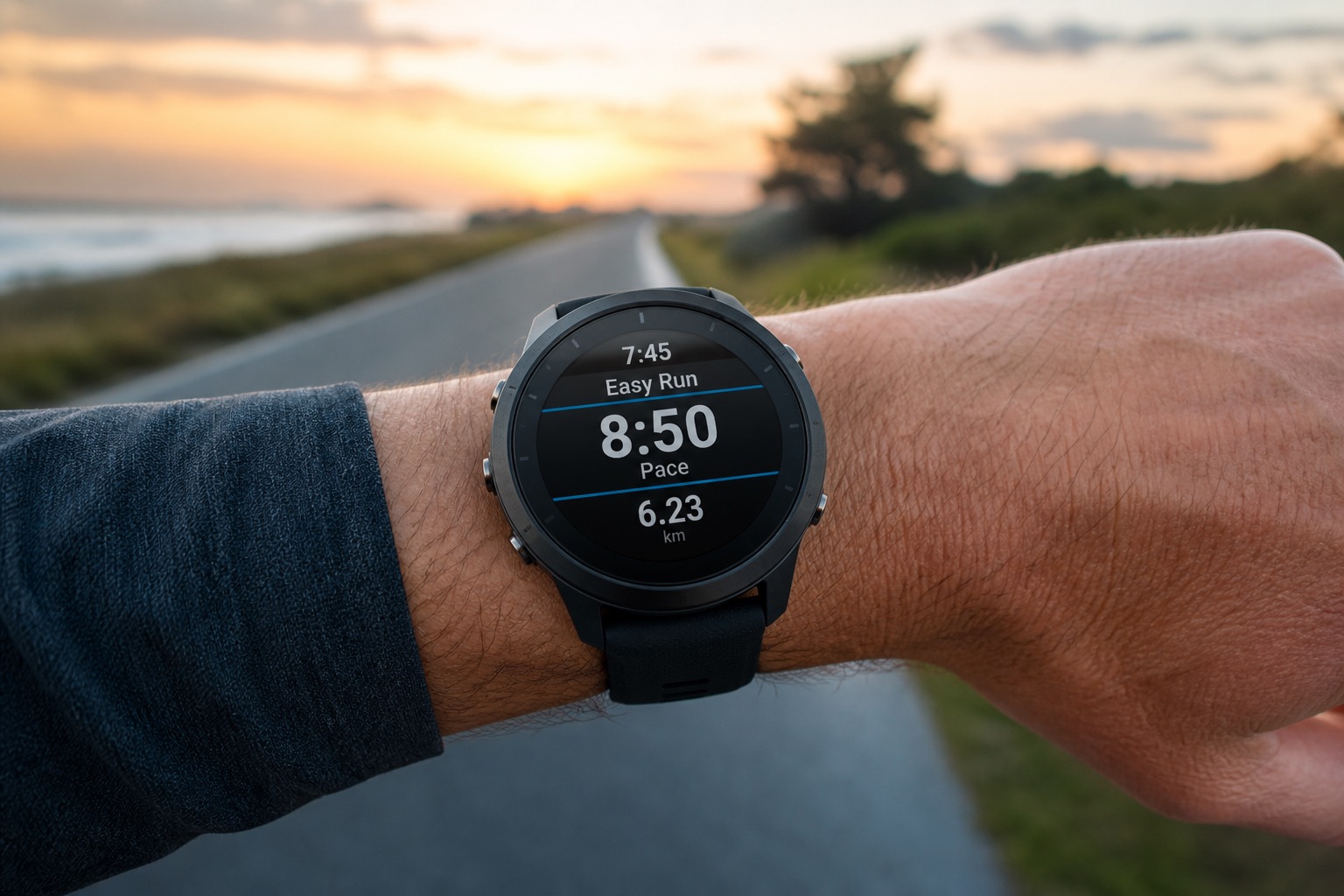
Open roads with a clear sky often give a good standard GNSS watch enough signal. In urban canyons, dense forest and steep terrain, reflected or blocked signals make the extra frequency more valuable.
The practical gain is a cleaner route and more credible pace through difficult sections, not laboratory precision. Runners should compare the hardest route they actually use.
3Five factors beyond the label
AMOLED
Bright, high-contrast screen. Great indoors and for rich graphics; brightness and always-on drain battery faster.
MIP (memory-in-pixel)
Reflective display that stays readable in bright sun with low power. Less “phone-like”, often paired with buttons.
Environment
- What it is
- Buildings, tree cover, cliffs and sky visibility.
- How it changes the choice
- Obstructions increase reflected and blocked signals.
- What you may notice
- More track drift and unstable pace in hard sections.
GNSS mode
- What it is
- GPS-only, all-systems, multi-band or automatic selection.
- How it changes the choice
- More signals can improve resilience while using more power.
- What you may notice
- Different accuracy and runtime from the same watch.
Antenna and software
- What it is
- Hardware placement and position-processing algorithms.
- How it changes the choice
- Good implementation can outperform a weak specification.
- What you may notice
- Model-level differences despite matching labels.
Battery cost
- What it is
- Runtime while recording in the selected mode.
- How it changes the choice
- Multi-band and bright displays increase drain.
- What you may notice
- Less reserve on long events.
Pace behaviour
- What it is
- How position data becomes live pace and distance.
- How it changes the choice
- Smoothing can stabilise pace but delay changes.
- What you may notice
- A steadier number that may still lag intervals.
4What to look for in each factor
Confirm battery, sensing method and controls against the sessions you log most — a feature you never open is dead weight on the wrist.
Look for
Environment
- Buildings, tree cover, cliffs and sky visibility.
- Watch for: More track drift and unstable pace in hard sections.
- Decision tip: Obstructions increase reflected and blocked signals.
Look for
GNSS mode
- GPS-only, all-systems, multi-band or automatic selection.
- Watch for: Different accuracy and runtime from the same watch.
- Decision tip: More signals can improve resilience while using more power.
Look for
Antenna and software
- Hardware placement and position-processing algorithms.
- Watch for: Model-level differences despite matching labels.
- Decision tip: Good implementation can outperform a weak specification.
Look for
Battery cost
- Runtime while recording in the selected mode.
- Watch for: Less reserve on long events.
- Decision tip: Multi-band and bright displays increase drain.
5Choose the right GNSS mode
Breadcrumb route
Follow a planned line and turn prompts. Fine on known roads; weak when trails fork with no surrounding map.
Full offline maps
Surrounding cartography helps at junctions and when you leave the planned track. Confirm offline maps and route import before you buy.
| Standard/all-systems | Multi-band | Automatic mode | |
|---|---|---|---|
| Open sky | Often sufficient | Small practical gain | Can save power by scaling down |
| Urban/forest | More vulnerable to error | Usually most valuable | Quality depends on implementation |
| Battery | Lower demand | Higher demand | Variable compromise |
| Control | Predictable economy | Predictable maximum accuracy | Convenient but less transparent |
Look for
Standard/all-systems
- Open sky: Often sufficient
- Urban/forest: More vulnerable to error
- Battery: Lower demand
- Control: Predictable economy
Look for
Multi-band
- Open sky: Small practical gain
- Urban/forest: Usually most valuable
- Battery: Higher demand
- Control: Predictable maximum accuracy
6Cleaner tracks versus longer runtime
Phone in hand / pocket
Fine for a post-run log. Awkward for live pace, wet weather and long GPS sessions shared with calls and music.
Wrist GPS watch
Glanceable fields, workout controls and continuous GPS without digging for a phone mid-interval.
What you may gain
- · Better resilience in difficult reception
- · Cleaner route traces in many obstructed environments
- · More dependable distance and pace inputs
What you may give up
- · Higher GPS battery consumption
- · No guarantee of perfect instant pace
- · Higher product cost if bundled with flagship features
7Three levels of running-watch GPS
These watches illustrate product positioning. Firmware, modes and performance can change.
Flagship multi-band watch
9.1 Kitletics Score
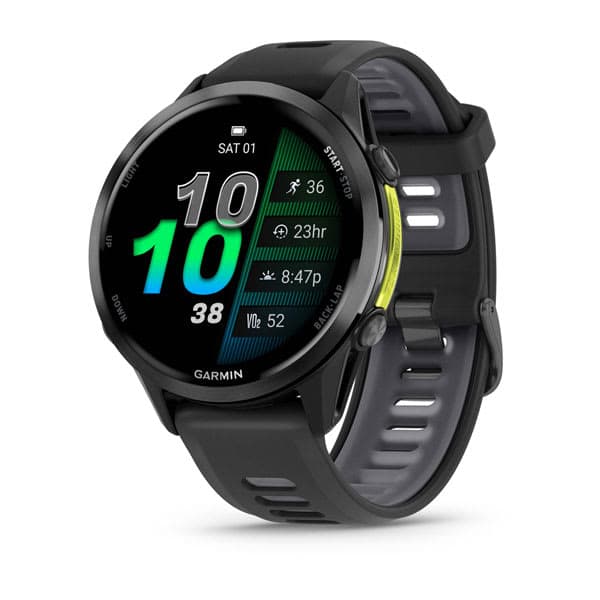
Garmin Forerunner 970
Why it illustrates the category: Combines multi-band reception with maps and a deep training platform.
Best for
- · Difficult routes
- · Navigation
- · Feature-heavy training
Trade-off
Premium cost and complexity exceed many runners' needs.
Read review →From € 689Light multi-band option
8.9 Kitletics Score
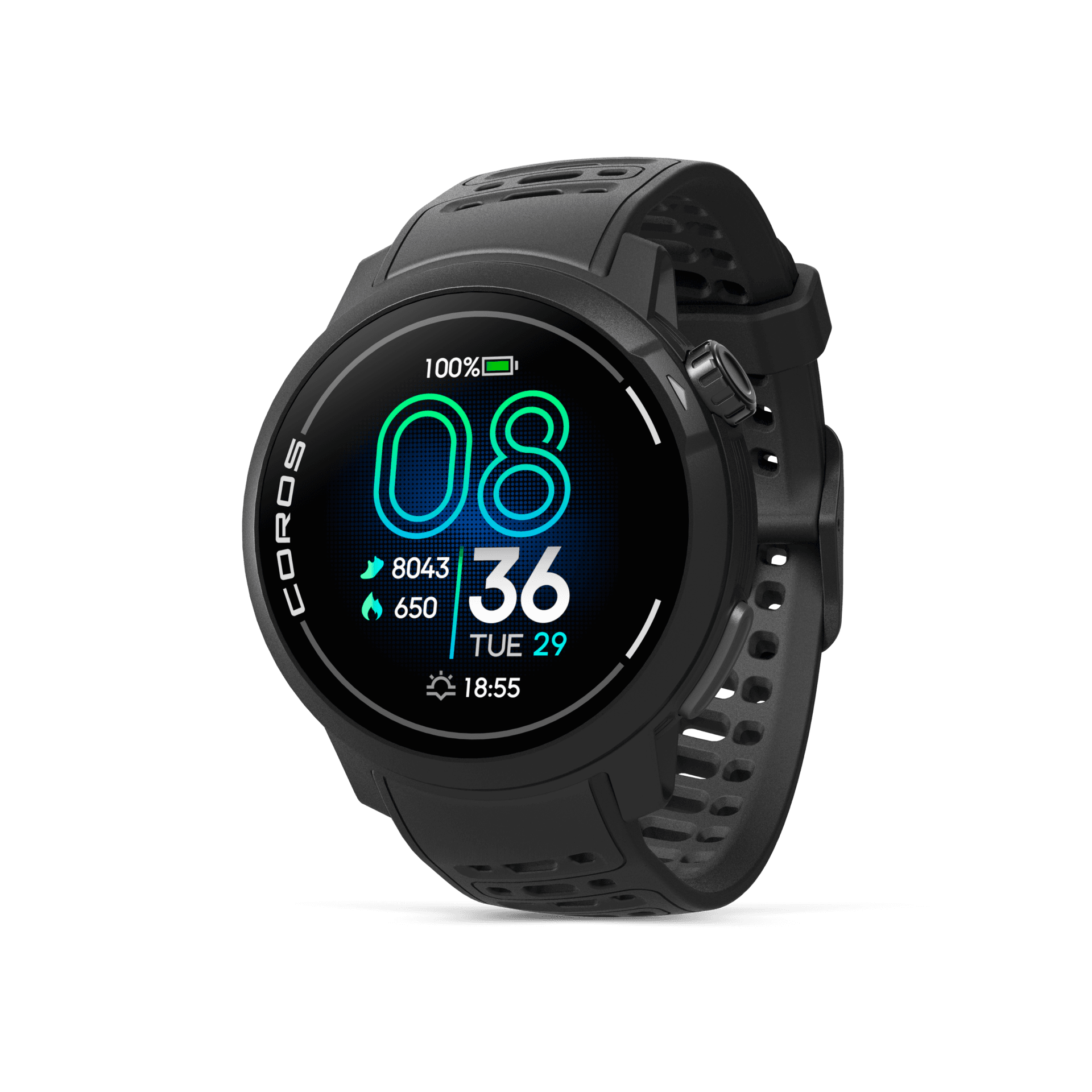
COROS Pace Pro
Why it illustrates the category: Shows multi-band and maps in a lighter performance-focused package.
Best for
- · Road and trail training
- · Weight-conscious runners
- · Battery-minded map users
Trade-off
Its ecosystem and extras differ from larger smartwatch platforms.
Read review →From € 349Standard-GPS alternative
7.6 Kitletics Score
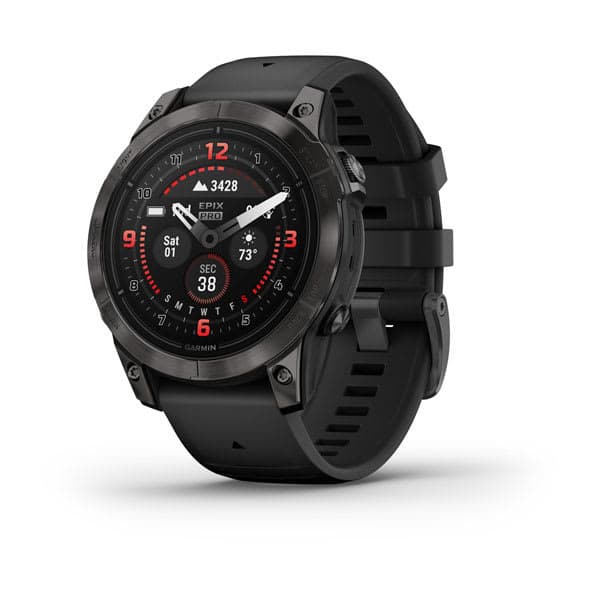
Garmin Forerunner 165
Why it illustrates the category: Demonstrates that a capable running watch can serve open routes without multi-band.
Best for
- · Open-road running
- · First GPS watch
- · Simpler training needs
Trade-off
Less resilient positioning in the most difficult environments.
Read review →From € 249
8How current options differ
| Product | Support approach | Cushion | Drop | Widths | Best use | Key trade-off |
|---|---|---|---|---|---|---|
| — | — | — | — | Flagship multi-band watch | Premium price | |
| — | — | — | — | Light multi-band option | Smaller third-party app ecosystem than Garmin | |
| — | — | — | — | Standard-GPS alternative | Fewer advanced metrics |
9Decide if multi-band is worth it
- 1
Name the hard route
Identify buildings, forest, cliffs or switchbacks that disrupt tracks.
- 2
Define the problem
Separate cosmetic track wobble from unusable pace or navigation.
- 3
Set the battery floor
Require enough runtime in the actual multi-band mode.
- 4
Compare model evidence
Look beyond the label to antenna and software performance.
- 5
Avoid feature spillover
Do not pay for maps or analytics you do not need merely to get multi-band.
- 6
Use modes deliberately
Enable maximum accuracy only where its benefit justifies the drain.
10Common mistakes
Expecting perfect tracks
Multi-band reduces some errors; it does not remove every source.
Using it everywhere
Open routes may not justify the additional battery drain.
Comparing the label only
Antenna, firmware and algorithms create model-level differences.
Reading the wrong battery figure
Use multi-band GPS runtime, not smartwatch runtime.
Buying unrelated extras
Do not let one GPS requirement force an unnecessary flagship bundle.
11Frequently asked questions
- Is multi-band GPS always better?
- Multi-band can improve tracking in difficult environments but typically uses more battery. Use it when your routes need it — not by default for every easy run.
- What is multi-band GPS on a running watch?
- It receives compatible satellite signals on more than one frequency, helping reduce some errors from reflected or obstructed signals.
- Do I need multi-band GPS for road running?
- Often not on open roads. It becomes more useful around tall buildings, dense trees, cliffs and other difficult reception.
- Does multi-band GPS use more battery?
- Usually yes. Compare runtime in the exact GNSS mode you intend to use and keep enough reserve for your longest activity.
- Does multi-band guarantee accurate instant pace?
- No. Positioning, antenna design, software and pace smoothing all affect the displayed result.
Compare GPS watch approaches
Garmin
Forerunner 970
Flagship multi-band watch
9.1 ExcellentFrom € 689
View review →COROS
Pace Pro
Light multi-band option
8.9 Very GoodFrom € 349
View review →Garmin
Forerunner 165
Standard-GPS alternative
7.6 SolidFrom € 249
View review →
Head-to-head comparisons
Continue the decision with focused head-to-heads — who should choose which, and the trade-offs that matter.
How we research
This guide combines manufacturer specifications, catalog product data and independent specialist coverage. Product examples render from live catalog data.